Loading...

Loading...
Date & time: Thursday, 11 June 2026, 13:00-14:00 (CET)
Location: Online
Join us for the Retracing webinar, part of the Reworlding series, where researchers from across the consortium will explore re-tracing as a capability for participatory design and research. Through situated cases and collaborative reflections, the session examines how retracing can support engagement with marginalised voices, more-than-human actors, and alternative temporalities within socio-environmental transitions.
The webinar introduces the Atlas of Synergies and reflects on participatory tools and methods that foreground situated knowledge, positionality, and collaborative learning. The session is ideal for researchers, practitioners, and students interested in participatory design, collective imagination, and socio-environmental change.
Speakers:
Prof. Dr. Cristiano Storni - Associate Professor in Interaction Design at the University of Limerick, working at the intersection of participatory design, social sciences, neurodiversity, sustainability, and more-than-human approaches to technology and restoration practices.
Carolina Carvalho - PhD researcher at the University of Limerick exploring accessibility, digital literacy, and participatory design, with a focus on autism and inclusive environments.
Anannya Bhowmik Paul - PhD researcher at Aalborg University whose work explores platform cooperativism, participatory design, and alternative economic imaginaries in collaboration with precariously employed communities.
Aslı Kolbas - PhD researcher at Hasselt University, architect, and artist working with storytelling, speculative design, and more-than-human ecological practices through interdisciplinary and participatory approaches, with a current focus on youth engagement in energy transitions.
Júlia Tena Mensa - PhD researcher at the University of Trento studying precarious self-employment within agroecological food production and alternative food networks, employing ethnographic and qualitative methods.
Programme:
- Introduction to Re-tracing (context and introduction)
- Retracing in participatory research and design
- Expanding the notion of Re-tracing
- The Atlas of Synergies and more-than-human perspectives
- Discussion & Conclusions
- Q&A
Registration & practical information:
Participation in the live webinar requires consent to be recorded for use in the Reworlding MOOC. Contributions during the Q&A may be edited, anonymized, or excluded. Registrants who do not consent may still view the edited webinar via the MOOC.
Registration is required to participate. After registration, participants will receive a copy of their responses from Google Forms. The Teams link and access instructions are included in the confirmation message and participants will additionally receive a reminder email with practical information approximately two days before the webinar.
Register here
For any questions, please contact: info@reworlding.eu
The Reworlding Spring School will take place at UHasselt, at the historic Beguinage in Hasselt (Belgium), from 4 to 7 May 2026. This 4-day intensive programme brings together researchers, practitioners and students to explore the role of re-institutioning in socio-environmental transitions.
Through this lens, we examine how institutions can be rethought and reshaped in times of ongoing socio-environmental crises. The programme focuses on the relationships between communities, institutions and more-than-human actors, and explores new forms of inclusive and collaborative governance.
The Spring School is structured around three thematic lenses:
- Politics of Institutions
Exploring power dynamics and roles within institutional change
- Embodied Institutions
Understanding how institutions are experienced and lived
- Institutions in Dialogue
Examining how communities and institutions engage with one another
These themes are explored through keynote lectures, workshops and interactive sessions, allowing participants to engage with different perspectives and contribute their own insights.
Practical information
- Dates: 4–7 May 2026
- Location: UHasselt, Beguinage, Hasselt (Belgium)
- Format: lectures, workshops and collective discussions
Keynote lectures can also be attended individually. More information and registration per lecture can be found bellow via the dedicated event pages.
Monday 4th of May 2026 - 17u30-18u30
Kapittelzaal (house #2 / 1.4) Beguinage Hasselt
Embodied Institutions - Re-institutioning & Governance
Liesbeth Huybrechts and Rachel Clarke. The role of artistic and design methods in Re-institutioning and More-than-Human Governance
Art is increasingly mobilised in climate governance and policy, yet often instrumentalised to serve predefined human agendas of data visualisation, awareness-raising, and science communication. This lecture explores design research’s role as a mediator of more radical art-driven participation that cultivates more-than-human care ecologies – relational configurations that redistribute sensing, accountability, and decision-making across human and other-than-human actors. Drawing on theories of care and affective politics alongside case studies addressing sustainable transitions on an interregional level, urban air pollution, and disaster recovery, we examine how design research can support art-driven participation to move anthropocentric frames in policymaking towards situated more-than-human co-composition. We argue that by mediating between artistic practice and governance, design research can foster more open, relational spaces for change, calling for sensitive, tentacular mechanisms to understand and articulate just and resilient more-than-human climate futures. The lecture opens a debate based on a critical literature review combined with accounts of three illustrative cases.
Please register via this form
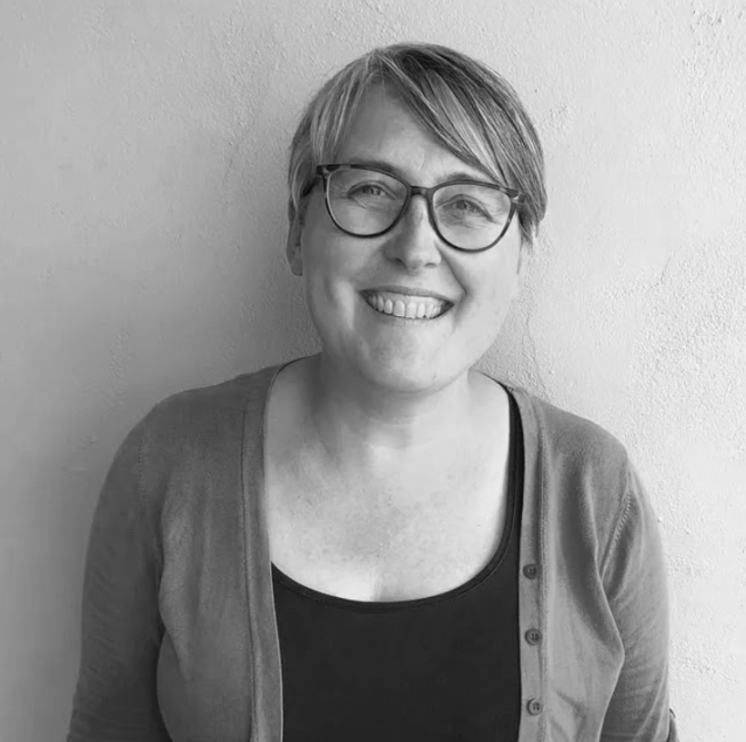
Rachel Clarke
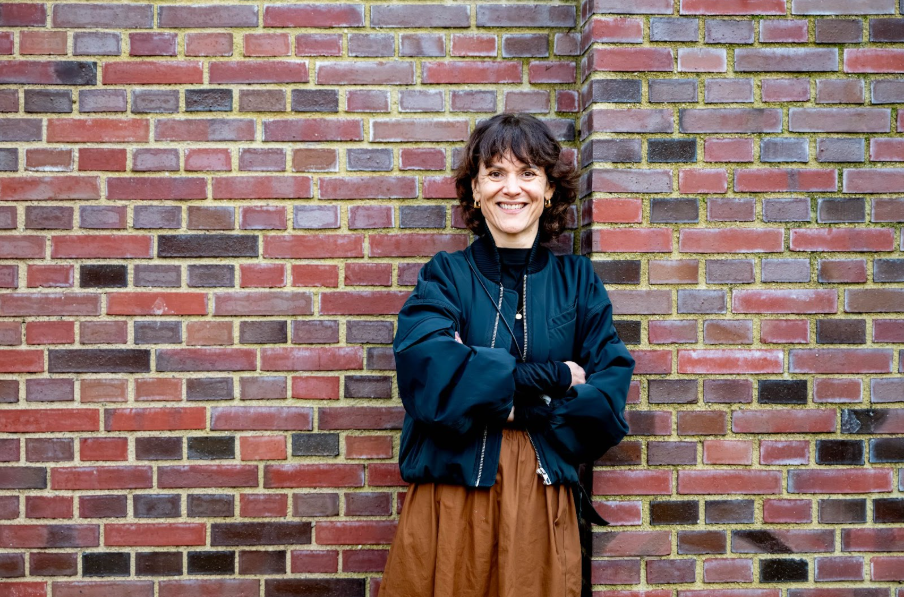
Liesbeth Huybrechts
Tuesday 5th of May 2026 - 17u30-18u30
Kapittelzaal (house #2 / 1.4), Beguinage Hasselt
The Politics of Institutions - Democratic Innovation through Co-Design
Brian Dixon, Head of Belfast School of Art, Ulster University, Belfast. Co-Design as a Mediator in Governance: The potential of reconfiguring relations between publics, institutions and knowledge
This talk will explore the intersection of co-design and democratic innovation, focusing on how participatory design practices can shape and are shaped by contemporary governance contexts. Drawing on democratic theory and design research, I will reflect on questions of legitimacy, inclusion, deliberation and power in participatory governance. Two cases will be presented. One looking at a set of recent design proposals in the context of Scottish Participation Requests, where communities can request local authority consultation. Another looking at a design-led democratic mini-public undertaken in an island context in Northern Ireland. Attention will be directed to how artefacts, processes, and infrastructures enable or constrain democratic participation, with co-design positioned as a mediating practice that can reconfigure relationships between publics, institutions, and knowledge within policy and decision-making processes.
Please register via this form
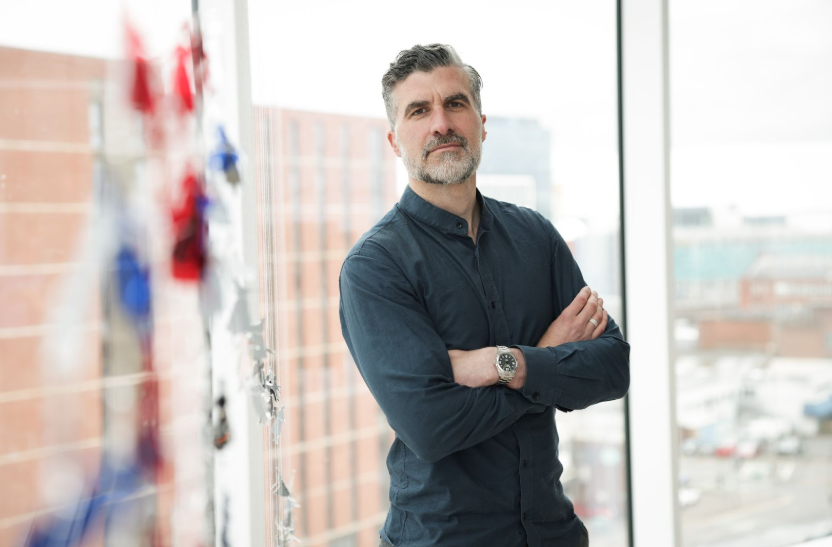
Brian Dixon
Wednesday 6th of May 2026 - 17u30-18u30
Kapittelzaal (house #2 / 1.4), Beguinage Hasselt
Institutions in Dialogue - Eco-social Change & Participatory Practice
Ann Light. Impact at Times of Change
As designers, we construct our problems as we set out to solve them. As changemakers, our culture’s assessment tools may represent aspects of life that we want to change. As practitioners, the world in which we begin our designs may have shifted by the time we are looking for evidence that our work was effective. This talk shares case studies from change projects where cultural and organisational shifts, both intended and incidental, shaped the doing. What mechanisms bridge between the world of dispassionate measurement and the reality of project-making on the ground?
Please register via this form
Ann Light
Thursday 7th of May 2026 - 18h00 - 19h00
Kapittelzaal (house #2 / 1.4), @Beguinage in Hasselt
Institutions in Dialogue - Design & the Civic Economy
Martijn de Waal. Design & the civic economy.
Can we think of the economy and money as something that could be designed? In this talk Martijn will bring a perspective from media studies and design towards emerging economic practices such as urban commons that intend to strengthen relationships of care and planetary well-being rather than mere profit or efficiency. He will explore the design of media and technologies that could facilitate such systems, such as currencies, current-sees and rights-based tokens. Will such an approach enable local economies to take negative externalities into account, while rewarding practices of care? Or do we risk to 'transactionalize the social', rather than the reverse: designing economies that are relational and caring?
For the lecture please register via this form
Presentation of workshop results – Reworlding Spring School
More-than-human design, Living Lab @Beguinage
19:00 – end
Within the Reworlding project, a group of designers, artists and social scientists collaborate on projects that challenge governments, universities and cultural institutions to move beyond human-centred thinking and take the non-human seriously in addressing current climate challenges. This approach is often referred to as more-than-human design.
By working together with both human and non-human actors (such as trees, solar panels, etc.), it explores more sustainable economic models (e.g. cooperatives), energy transitions and water management.
During the Spring School, participants will engage with these ideas through a week of collective thinking and design. The outcomes of this process will be presented during Kunstennacht.
Martijn de Waal
Date & time: Tuesday, 21 April 2026, 12:00–13:00 (CET)
Location: Online
Join us for the Reinstitutioning webinar, part of the Reworlding series, where Prof. Maurizio Teli and Prof. Tom Børsen will explore how the concept of institutioning informs design research and educational initiatives. This session also serves as an introduction to the Reworlding Spring School on Reinstitutioning, taking place in May 2026 at UHasselt. The webinar is ideal for researchers, practitioners, and students interested in participatory design, collective imagination, and socio-environmental transitions.
Speakers:
Prof. Dr. Maurizio Teli – Associate Professor at Aalborg University, Denmark. His work focuses on participatory design, digital technologies, sustainable futures, and socio-ecological justice. He regularly reviews and serves on programme committees across computing, design, and social science venues, and has authored more than one hundred publications.
Prof. Dr. Tom Børsen – Associate Professor at Aalborg University and member of the Responsible Technology Futures (Re-TECH) research group. Tom’s research explores how ethical and participatory elements can be integrated into higher education to promote responsibility in technological innovation. He has extensive experience in project and research management, is co-editor of the Routledge International Handbook of Engineering Ethics Education (2025) and was awarded the Maffioli Award for Innovative Engineering Education in 2025.
Programme:
5 min: Introduction by moderator
10–15 min: Institutioning in Research
10–15 min: Institutioning in Education
Q&A
Registration & practical information:
Participation in the live webinar requires consent to be recorded for use in the Reworlding MOOC. Contributions during the Q&A may be edited, anonymized, or excluded. Registrants who do not consent may still view the edited webinar via the MOOC.
After registration, participants will receive a copy of their responses from Google Forms. The webinar link and access instructions will be sent by email at least one week before the session.
Register here
For any questions, please contact: info@reworlding.eu
In collaboration with:
The Marie Skłodowska-Curie Doctoral Network “Reworlding”
The Social Pattern Recognition – SPaRe Lab of the Department of Sociology and Social Research, University of Trento
Mapping, Representing, and Visualising Ethnographic Data
9 July 2025, 2:30-6:30 PM + 10 July 2025, 10:30-12:30 AM
University of Trento, Department of Sociology and Social Research
The pre-conference workshop provides an opportunity for Ph.D. students and junior post-docs engaged in ethnographic and qualitative research to discuss their work with colleagues and senior researchers in an interdisciplinary, informal and stimulating environment.
For this conference edition, the workshop focuses on the representation of ethnographic data and analysis, including complex networks of eco-social and power relations. Qualitative research generates rich, in-depth findings, yet it often fails to synthesise, visualise and formalise them. This reduces the potential impact, circulation, and re-use —across disciplinary communities, and beyond— of these analyses. Drawing on participants’ ongoing fieldwork and data communication challenges, the workshop aims to explore modalities, techniques, and artefacts for the wider use of ethnographic findings.
For more details on registration and the selection procedure, please visit the website:
The summer school as part of the reworlding program will focus on the idea of reimagination. We will be hosted by ETH Newrope and use this occasion to experience a series of pedagogical and research experiments on developing and defining approaches for reimagination.
As a summer school we will take up different roles. Going from a mode of presenting to being guests in a design studio on reworlding, experimenting with own workshop formats and participating in a three days workshop where we explore imagination as a layered and collaborative practice rather than merely as an individualized faculty that allows us to conjure 'new worlds' in the theatre of our mind.
The summer school is preceded by a lecture and conversations series on landscapes and imagination and will allow to both present own work, take time to get to know each other and collectively explore new methods and tools.
The first part of the summer school will be organized in the Design in Dialogue Lab at the ETH where for the second part of the summer school we become part of different cultural organizations in Zürich.
Stijn Oosterlynck
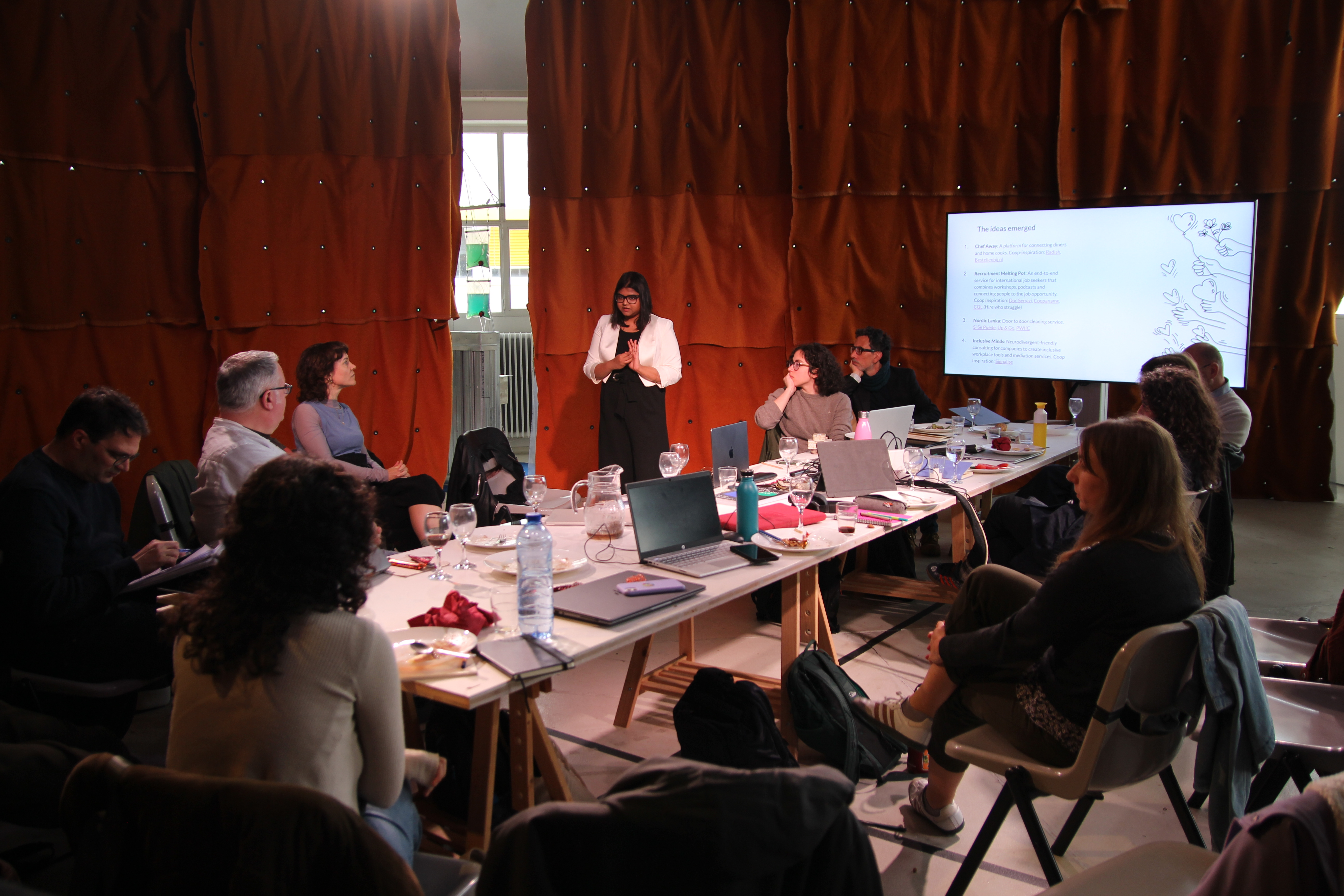
Reworlding Doctoral Colloquium Sessions
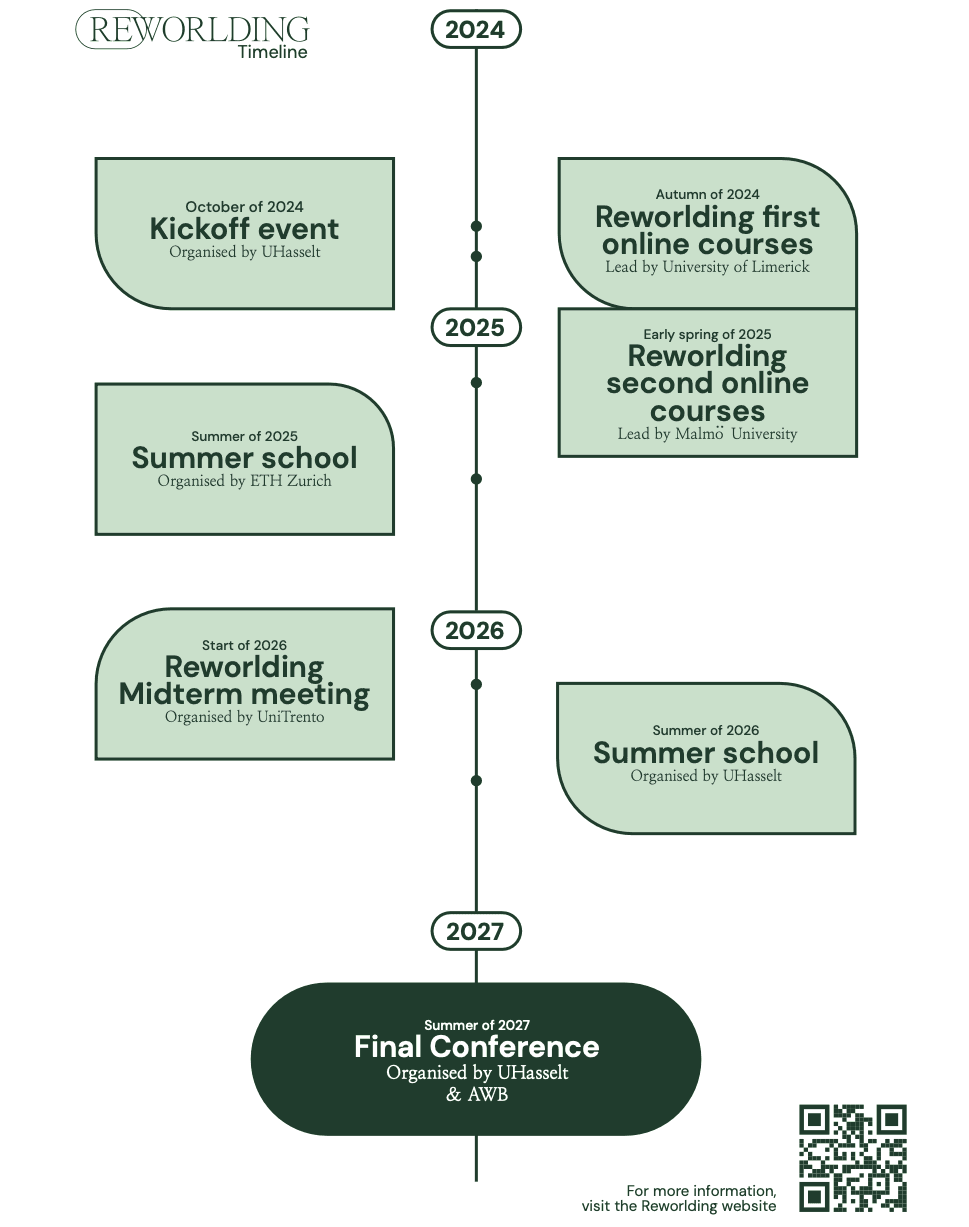
REWORLDING Kickoff Event
The official REWORLDING Kickoff Event took place on October 9-10, 2024, in Hasselt, marking the launch of the project with a mix of closed consortium sessions and public discussions.
The first day was dedicated to internal workshops, co-organized with the Driving Urban Transitions (DUT) LISTEN project, including Mud and Gut, an exploratory session on how design can reveal and spark discussions around soil contamination. The second day opened up to the public, featuring inspiring lectures and a debate with Michel Bastian, Studio Plastique, and project supervisors, followed by a demonstration moment by the Doctoral Candidates (DCs).
This event introduced REWORLDING as a careful and situated Participatory Design approach, focusing on the synergies between human and more-than-human worlds. Through lectures, debates, and performative presentations, participants explored how ecological challenges are experienced differently across communities and organizations, often leading to societal polarization.
Dr. Michelle Bastian

Studio Plastique