Loading...

Loading...
The REWORLDING training programme offers a rich mix of lectures, workshops and hands-on activities, originally designed for the doctoral candidates in the network. The training combines research-driven learning, advanced scientific courses (ASC), and transferable skills development (TSC). Two interdisciplinary summer schools bring together researchers and non-academic partners to explore socio-environmental challenges through teamwork and exchange. Over time, these trainings will be made available to a broader audience through open formats such as MOOCs. The training section will gradually expand with videos, documentation and interactive materials to support learning and inspiration beyond the REWORLDING network.
The Retracing Lecture Series is a structured program of three integrated courses, combining key lectures and workshops to explore academic skills and theoretical frameworks within reworlding. This series challenges the limitations of traditional European Participatory Design (PD) methodologies and examines how they can be expanded to better address today's complex socio-ecological challenges. By engaging diverse perspectives, we develop new ways of perceiving and acting in the world. The series is led by UL in collaboration with AAU, MAU, UH and UNITN. After completion students are rewarded with 2 ECTS.
Giving a Voice to Nature.
During the Participatory Design Conference 2024 (PDC2024), the REWORLDING workshop, titled “Giving a Voice to Nature: Participatory Design with Non-Human Stakeholders for Sustainable Development”, brought together all DCs and external researchers. Participants contributed 1,000-word pieces, serving as the foundation for building a research network and sparking discussions on reworlding.
The workshop explored how to design with non-human natural entities, challenging the traditional human-centered approach in participatory design. It addressed the often-overlooked need to involve these entities in the design process, particularly in the context of sustainable development. Through collaborative debate and reflection, participants examined new ways of integrating nature as an active stakeholder in design.
Ethics in Participatory Research and Design
Open Science in Participatory Research
This workshop explored Open Science within Participatory Design (PD), focusing on the FAIR data principles—Findable, Accessible, Interoperable, and Reusable. Open Science within the European framework aims to make research and data widely accessible, fostering transparency, collaboration, and inclusivity.
Participants learned how inclusive (digital) data collection and comprehensive Data Management Plans (DMPs) ensure data integrity and accessibility, enhancing research quality. In PD, involving stakeholders in data collection strengthens engagement, making the process more impactful. Through hands-on exercises and real-world case studies, participants gained practical experience, enriching research outcomes while developing essential collaboration and problem-solving skills.
Led by prof. Liesbeth Huybrechts
The Reconnecting Methods Training provides Doctoral Candidates (DCs) with valuable insights into Participatory Action Research (PAR), situated design, and co-design methods, alongside skills in academic writing, communication, and community engagement. The training focuses on participatory design, PAR, and design anthropology/ethnography, with hands-on experience in relational design using translation objects in collaboration with non-academic partners.
DCs will engage in sessions on mutual and collective learning, co-design, and prototyping, followed by workshops using the Participation Studio methodology. The program emphasizes connecting academic research with socio-environmental contexts through scientific communication and community engagement. Additionally, DCs will explore topics such as academic writing, interdisciplinary alliances, research valorisation, and public science.
PAR, ethnography and multivocality
Interdisciplinary and cross-sectoral alliances
Mutual, embodied and collective learning in PD
Codesign and Prototyping More-Than-Human Futures
Academic Writing and Communication
Research valorisation, ethics and public science
Expanding Learning Labs
The Reimagining Summer School (Zurich, May 2025) explored co-designing spaces and environments for collective learning. Doctoral candidates gained hands-on experience in shaping spatial, organizational, and infrastructural forms for learning, while developing participatory tools and methods for collaboration with diverse stakeholders.
The programme combined research and pedagogy through colloquium sessions, experimental workshops, and multi-day collaborative exercises with ETH Master students, including LARP-based methods to envision socio-environmental futures. Engagements with local cultural organisations extended the learning beyond the university, fostering mutual learning, experimentation, and innovative approaches to participatory design in higher education.
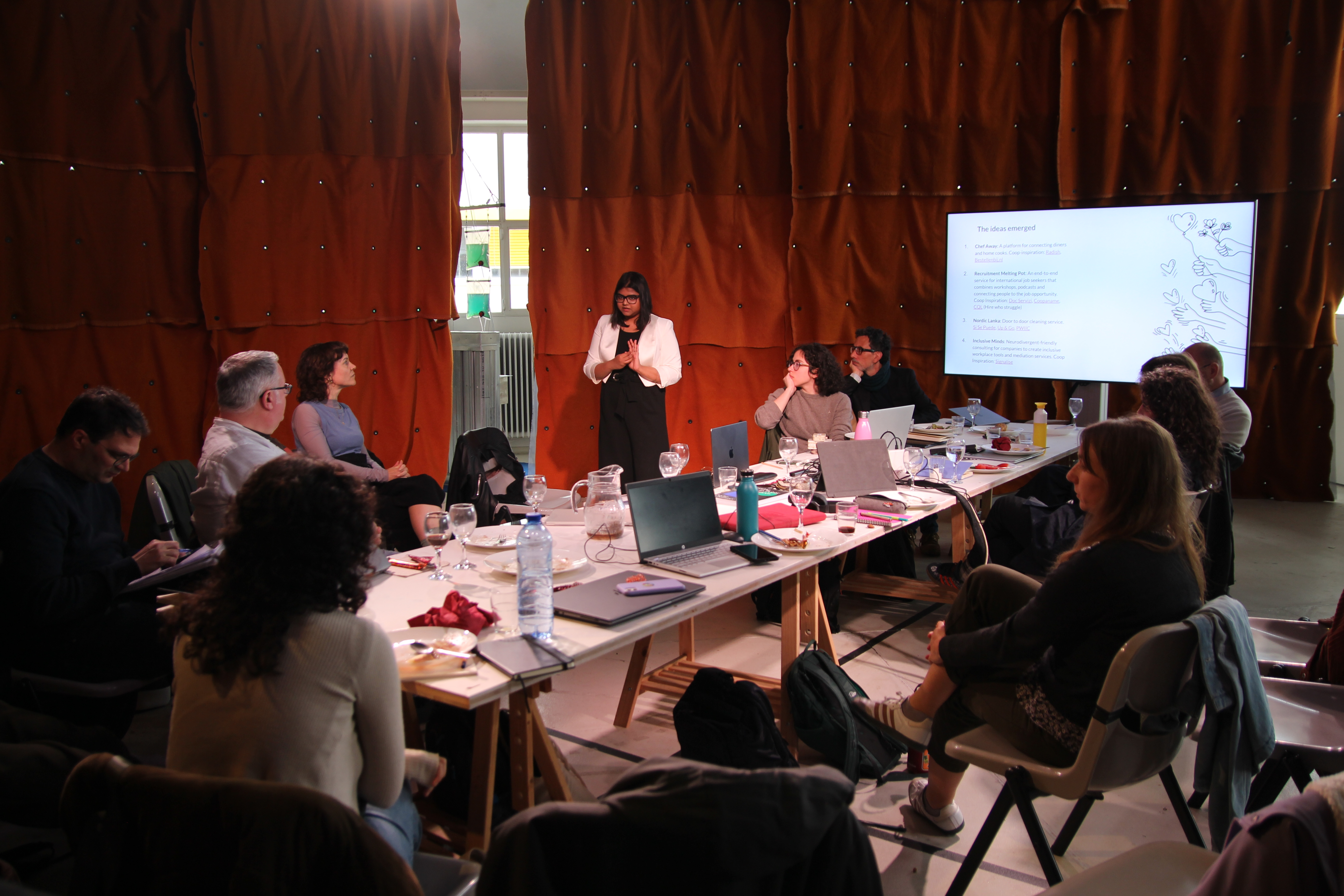
The colloquium sessions brought together all REWORLDING doctoral candidates under the consortium framework. Each candidate presented their ongoing research, followed by Q&A sessions that encouraged critical reflection and peer feedback. External reviewer Stijn Oosterlynck contributed additional perspectives, fostering rigorous discussion and exchange.
Topics explored included future energy systems, sustainable farming practices, cooperative models, and communication infrastructures. The sessions offered a dedicated space for doctoral candidates to situate their work within broader socio-environmental challenges and to collectively reflect on the role of imagination in shaping possible futures.
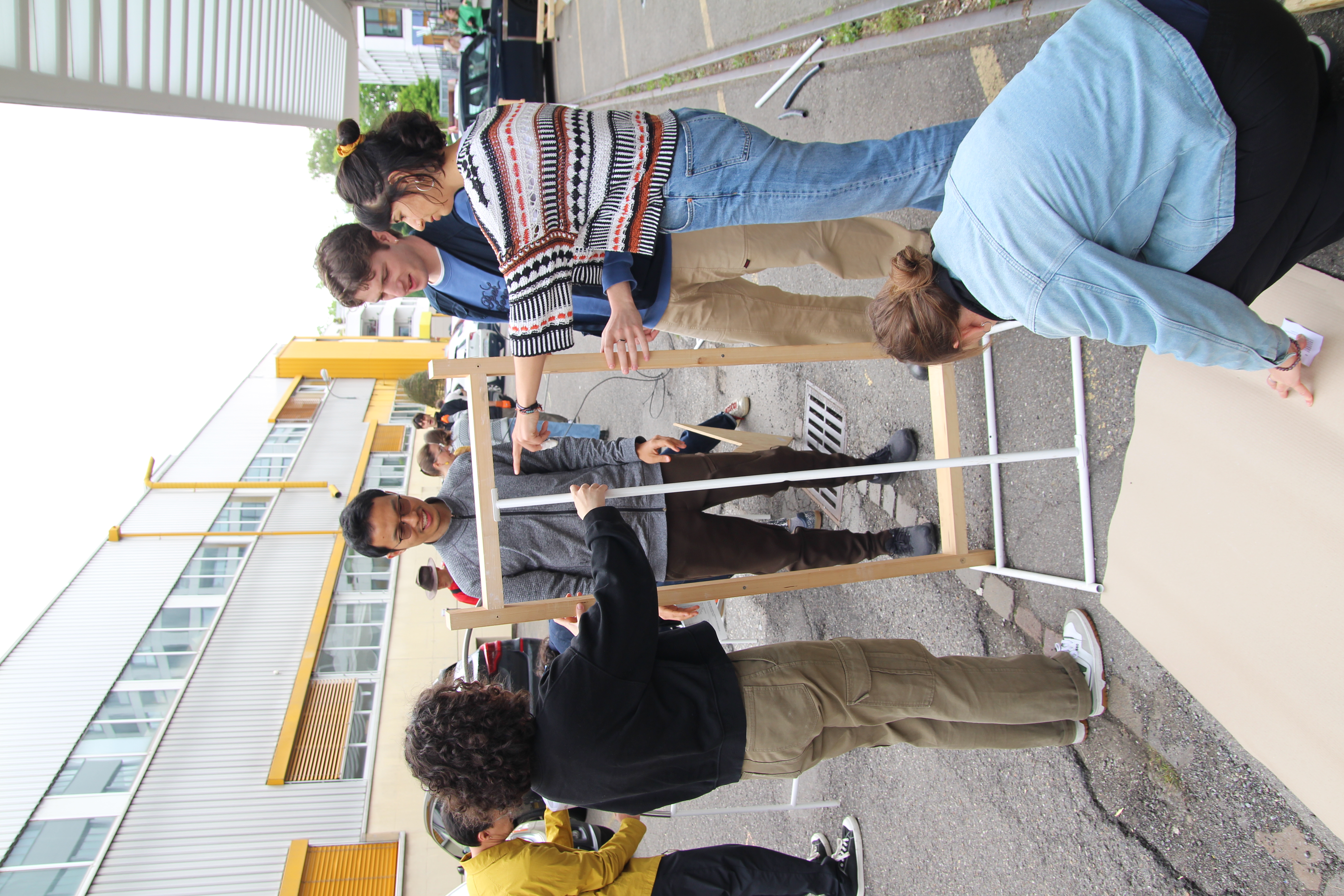
In the Rote Fabrik, doctoral candidates took part in the Reimagination Workshop, co-facilitated by Mira Heikillä and Philippe Vandenbroeck (Newrope, ETH Zurich). The workshop aimed to cultivate a “practice of imagination” as a layered and collaborative process, not just an individual act of envisioning. Drawing inspiration from Philippe’s PhD research in a former mining territory, participants explored how imagination can infuse spaces and bodies with vitality, curiosity, and creativity, bringing new possibilities into the world.
The workshop began with three morning sessions focused on primary experiences of breath, body, contact, and thought, creating a generative environment for collective creation. Inspired by Joseph Beuys and Tim Ingold, participants engaged in exercises that emphasised inhabiting the moment of incipience, experiencing newness as an active, collaborative practice rather than mere novelty.
Following this, doctoral candidates had the opportunity to design and test their own workshops with each other. These student-led sessions allowed participants to experiment with ideas, methods, and formats, translating the principles of the Reimagination Workshop into hands-on learning experiences while receiving feedback from peers.
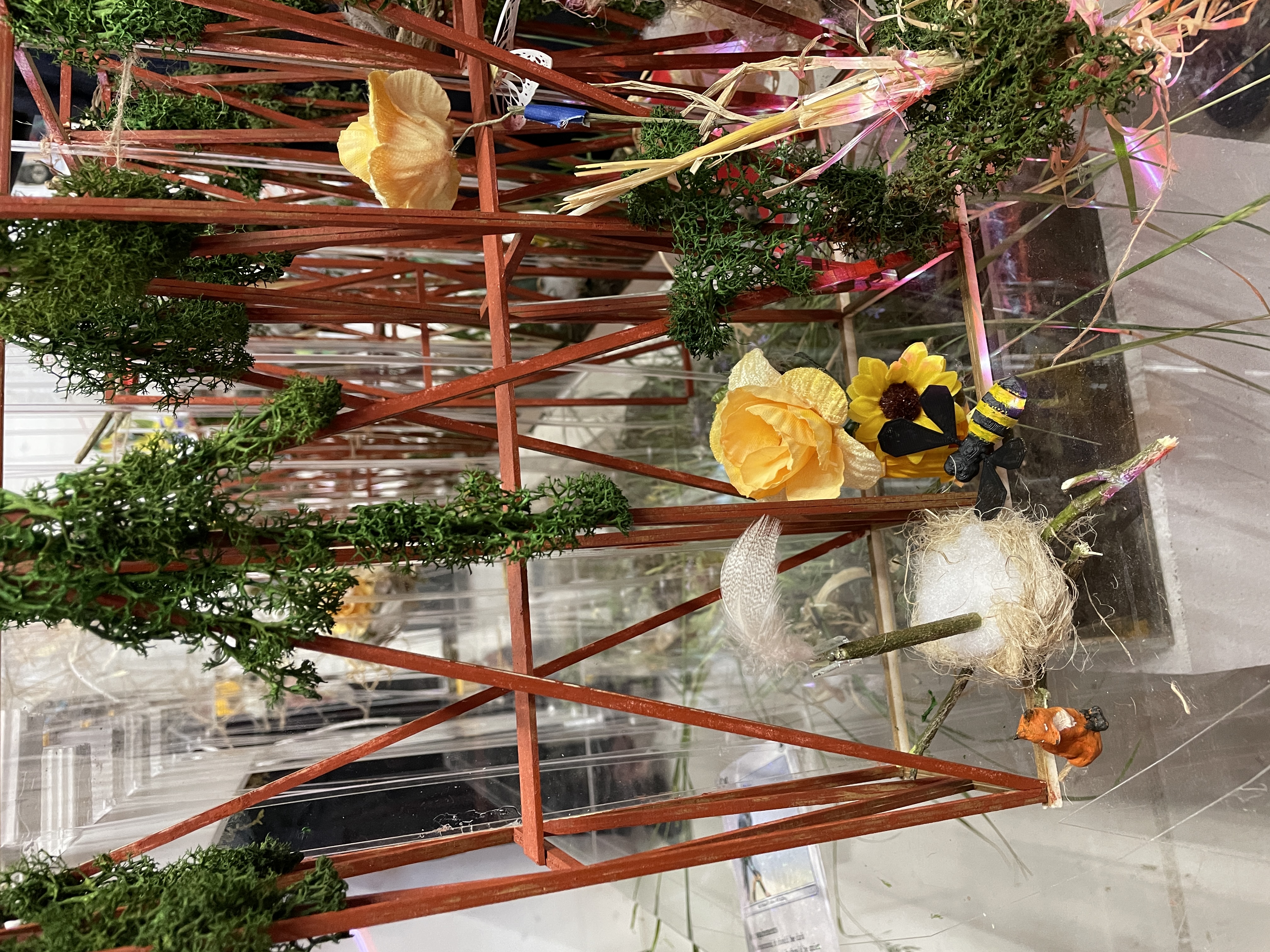
As part of the Reimagining Summer School, doctoral candidates participated in Nature-Culture Spaces workshops, discussing concrete examples of alternative learning and living environments, including Floating University (Berlin), De Ceuvel (Amsterdam), and Stadionbrache (Zurich). Q&A sessions encouraged reflection on how these real-world experiments link design, pedagogy, and socio-environmental transformation.
Building on these insights, participants engaged in a collaborative exercises alongside ETH Master students, using LARP-based (live action role play) methods to explore socio-environmental futures. Scenarios incorporated not only human but also more-than-human actors, such as ecosystems, animals, and technological systems, fostering collective imagination, iterative problem-solving, and interdisciplinary dialogue.
The Reworlding Spring School will take place at UHasselt, in the historic Beguinage of Hasselt (Belgium), from 4 to 7 May 2026. This four-day intensive programme brings together researchers, practitioners, and students to explore the role of re-institutioning in socio-environmental transitions, examining how institutions can be rethought and reshaped in times of ongoing crises.
The programme is structured around three thematic lenses - Politics of Institutions, Embodied Institutions, and Institutions in Dialogue - and combines keynote lectures, workshops, and interactive sessions. Participants engage with diverse perspectives, explore relationships between communities, institutions, and more-than-human actors, and contribute their own insights into inclusive and collaborative governance. Keynotes are also open for individual attendance, with further details and registration available via dedicated event pages.
The Reworlding project offers a series of webinars exploring its four core themes: Retracing, Reconnecting, Reimagining, and Reinstitutioning. Each session highlights the project’s tools, methods, and approaches, showing how participatory design and collective imagination can support socio-environmental transitions.
The webinars are designed for researchers, practitioners, and students interested in innovative methods for research, design, and education. Recordings and registration links will be made available here, and each session will also be included in the future Reworlding MOOC, allowing broader access to the project’s learning resources.